Kidney is a complex organ which is capable of performing multiple functions. Kidney is akin to a tireless marvellous machine.
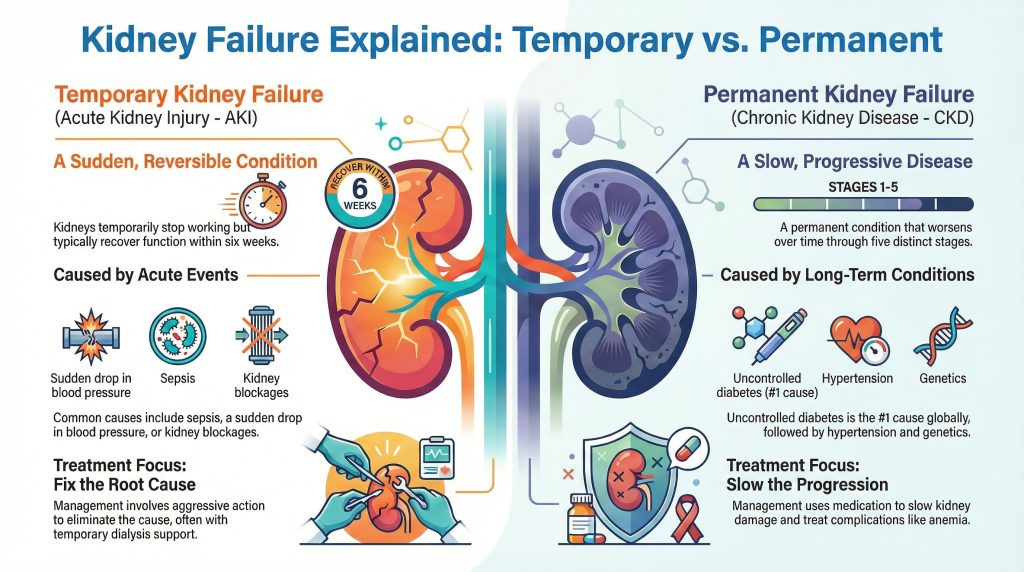
Kidney failure is primarily of two types – 1. Temporary Kidney Failure 2. Permanent Kidney Failure
1.Temporary Kidney Failure:
Temporary kidney failure is technically known as Acute Kidney Injury (AKI). In this condition, as the name suggests, the kidneys fail to function on a temporary basis. They regain function after a few days or weeks. Usually such patients recover within 6 weeks. The reason for such temporary kidney failure is blood getting contaminated with bacteria and bacterial toxins ( Sepsis), sudden and precipitous drop in blood pressure, medications such as painkillers and few antibiotics or kidney stones getting stuck in the kidney drainage tubes and causing blockages to the flow of urine ( Kidney obstruction). The crux of managing such conditions is the prompt identification of the root cause causing kidney dysfunctions and eliminating it on war footing basis. The management consists of aggressive evaluation to identify and eliminate the root cause, offering supportive dialysis for a temporary period of time lasting from days to weeks and medications to hasten the recovery of kidneys.
2. Permanent Kidney Failure:
On the contrary, Permanent kidney failure is a permanent and slowly progressing form of kidney failure. This is technically known as Chronic Kidney Disease (CKD). This has got five stages – Stage 1 to Stage 5. There are four important causes for Permanent Kidney Failure and include long standing uncontrolled diabetes, long standing hypertension, genetic causes such as ADPKD and long term indiscriminate usage of painkillers. It is essential to remember that Diabetes is the leading cause of Chronic kidney Disease all across the globe including India and Hyderabad. The management of such patients is focussed on usage of medications to slow down the progress of CKD, strict control of Diabetes and Hypertension. Another essential component in treating such patients is using medications to reduce the complications of CKD as low haemoglobin and bone melting which arises as consequence of Chronic kidney disease. Patients are managed with medications from stage 1 to stage 5. Patients require either kidney transplantation or life long dialysis only in late stages of CKD Stage 5.
Therefore, it is essential to understand that not all kidney failures are the same and that there are two primary prototypes of kidney failure. The management of such kidney failures depends on the best efforts to recognise the type of kidney failure by the nephrologist.